
Campus Enhancements for Student Life
By Joshua Sylvé
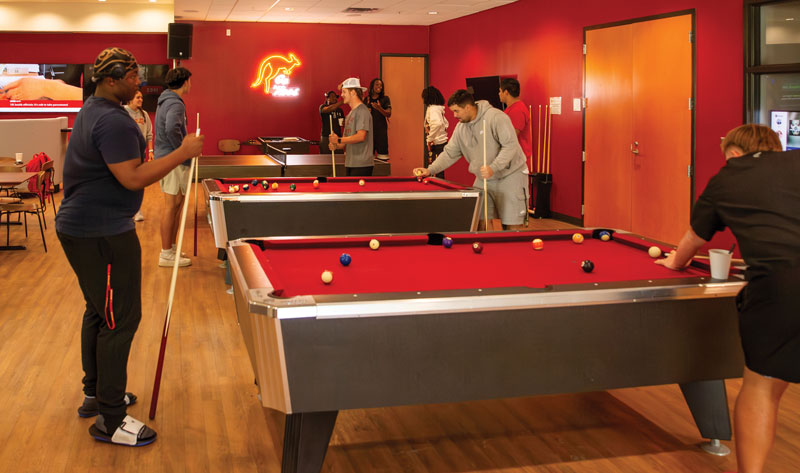
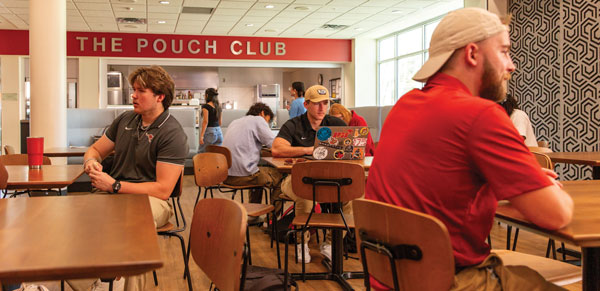
In partnership with Aramark, the Pouch Club was remodeled in summer 2025, offering a more welcoming gathering place for students. The AC community celebrated the grand reopening of the Pouch Club on October 13, 2025.

Those who have visited the Austin College campus recently (or enjoyed the beautiful campus photos in the pages of this magazine) have likely noted the many enhancements and renewal work that have taken place over the past several years to refresh the buildings and grounds.
From the moment visitors enter the newly renovated Zauk Circle from Grand Avenue, the physical surroundings reveal what kind of place Austin College is: welcoming, vibrant, and focused. As beautiful as these campus enhancements are, ’Roos know it’s what is on the inside that truly matters—especially for the students who spend four years living and learning here.
Campus renewal efforts over the last year haven’t ended at the buildings’ perimeters. Interior student spaces have been renovated and reimagined as well; from the essentials, like updated restrooms in some residence halls and new appliances in the Bryan Apartments, to strategic efforts to create or enhance the so-called “third spaces”—places outside the residence halls where students congregate and find community.
According to Dean of Students Michael Deen, “These ‘third spaces’—what I think of as the spaces on campus that make individual students feel safe and at home beyond the security of their dorms or the familiarity of their classrooms—become vital to personal development. Students are making decisions with their eyes and ears, thinking this is going to be my place for four years, so it does matter.”
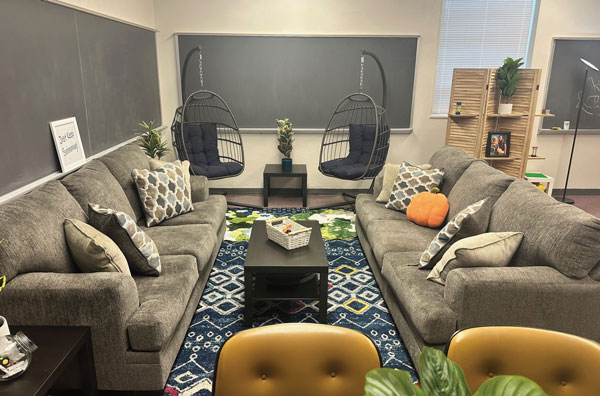
With the support of generous donors, some areas in Moody Center were converted to commuter and neurodivergent student lounges.
With the majority of students living on campus, spaces in which they can experience the serenity that home provides are appreciated. In 2024, in response to surveys completed by current students and recent graduates, the College developed Commuter and Neurodivergent Student Lounges on campus, located in the Moody Center. Within these spaces, students can temporarily escape the stresses of their daily routine—from catching a moment of rest between classes to having a space to calm their senses. The environment provided by the lounges encourages relaxation and tranquility and addresses practical needs like a fridge and microwave for student use.
The largest “third space” on campus is the Robert J. and Mary Wright Campus Center, also known as the WCC. A hub for students, faculty, and staff alike, typical wear and tear in this high-traffic space accumulates quickly. During summer 2025, updates were made throughout the WCC. These include new furniture in the Dining Hall and Living Room, as well as a full remodel of the Pouch Club, completed in collaboration with campus dining partner Aramark.
The Pouch Club, traditionally a gathering space for quick snacks and meet-ups, has benefited tremendously from the partnership with Aramark. Expanded open hours in the Dining Hall had resulted in fewer students eating meals in the Pouch Club, and Aramark and the College recognized that it was time to reimagine how the space is used. The new layout features a study nook, equipped with desk pods and a retractable wall to dampen sound. A centralized gaming area includes pool, ping pong, and foosball tables. A bank of TVs is available for livestreaming sporting events or hosting video game competitions. In the center, a flexible space accommodates dining and events. “Even the kitchen equipment in the Pouch Club was redone,” said Deen. The Pouch Club reopened on October 13, with a ribbon-cutting ceremony, remarks from President O’Day and Aramark representatives, and a celebration including food, party gifts, and a live performance from the AC Cheer team.
Changes took place even closer to home for resident students. Over the last year, the restrooms in Dean and Caruth Residence Halls underwent modernization in response to input from student focus groups. According to Deen, “We found that today’s students are more modest. They’re not as comfortable as students were maybe 30 years ago, and they want more privacy.” The new restrooms feature completely private toilet and shower cubicles, replacing the old stalls. Renovations in Dean and Caruth were completed in summer 2025, and the College plans to continue the renovations to additional residence halls in the coming years.
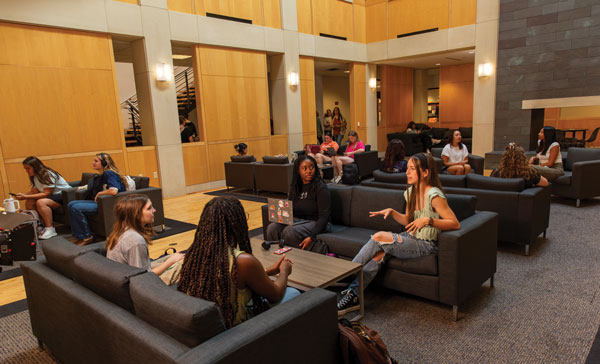
The Wright Campus Center Living Room, equipped with new furniture, offers a comfortable meeting place for students to enjoy.
The spaces that Austin College students call home for four years are more than rooms; they are places in which lasting friendships are built and cherished memories are created. As new spaces are developed and existing spaces are renewed, the College is making room for more unforgettable moments.