
Across every discipline at Austin College, faculty are finding creative ways to immerse students in hands-on environments that deepen understanding and spark curiosity. Whether that means debating bills under the Capitol dome, digging up fossils, or collaborating with local nonprofits, these experiences show students that education is not just something you study—it’s something you do.
Few field experiences feel as immediate and eye-opening as the trip Associate Professor of Public Health Dr. Mathias Akuoko offers students in his Leadership & Policy Legislation course. Taught every two years to coincide with the Texas legislative session, the class travels to the State Capitol in Austin to watch delegates debate bills in real time. “We talk about health policies and how they affect this group or affect that group [in class]. But then I wanted the students to have the experience to know that they can also contribute to making laws,” said Akuoko.
Akuoko believes the visit offers students something a textbook never could. “I mean, the lawmaking process seemed too far away from them,” he said. “They didn’t know that they had a part to play. So, it was very great experiential learning for them, and also for contact purposes, because part of it is also developing their careers.” By witnessing lawmakers negotiate policy on the House and Senate floors, students come to understand the complexities, challenges, and human dimensions of lawmaking. They return to campus with a deeper awareness of how policy is shaped and the role they might play in influencing it.
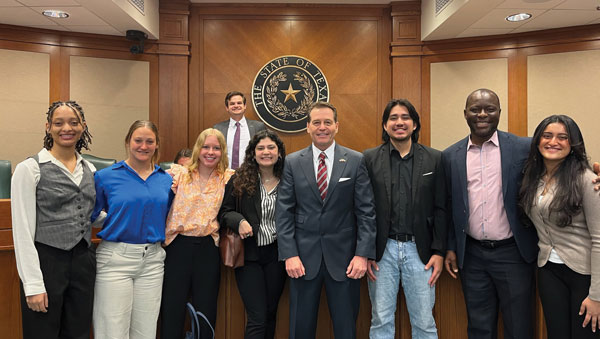
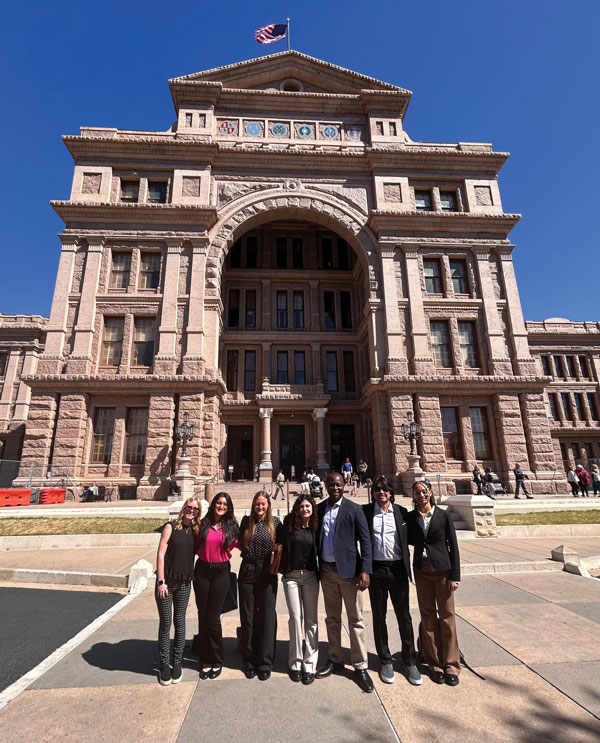
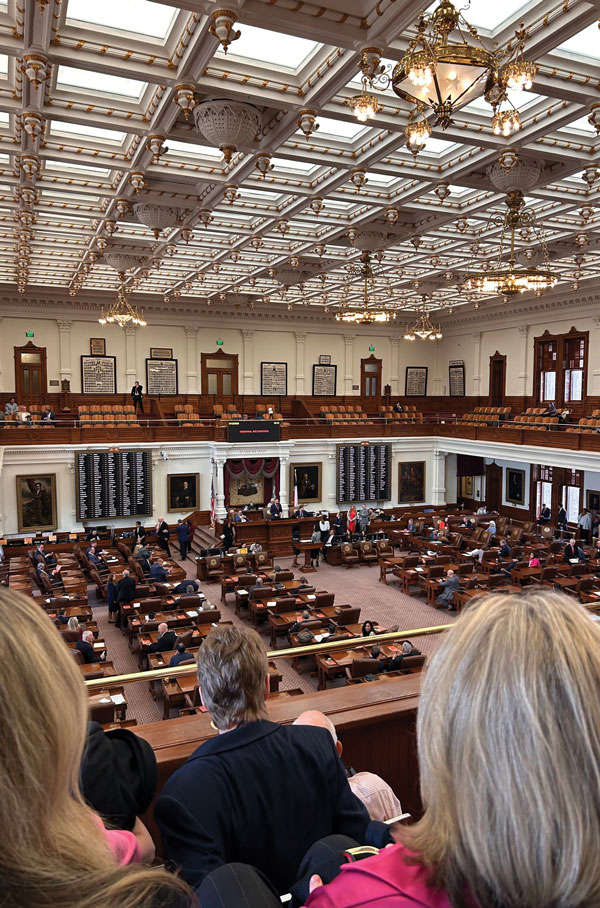
As part of his Leadership & Policy Legislation course, Associate Professor of Public Health Dr. Mathias Akuoko offers students the opportunity to travel to the State Capitol in Austin to watch delegates negotiate policy.
Miles from any marble floors, another kind of hands-on education unfolds under the guidance of Associate Professor of Biology Dr. Thomas Stidham. Stidham’s Paleobiology and Fossil Record students quite literally dug into their work last summer, searching in sediment for marine fossils near the Denison Dam. These excursions fundamentally shift how students understand science. “I’m hoping to impart the fun and wonder of discovery in science, biodiversity, and nature that has driven me through much of my life and led to my career in education and research,” Stidham explained.
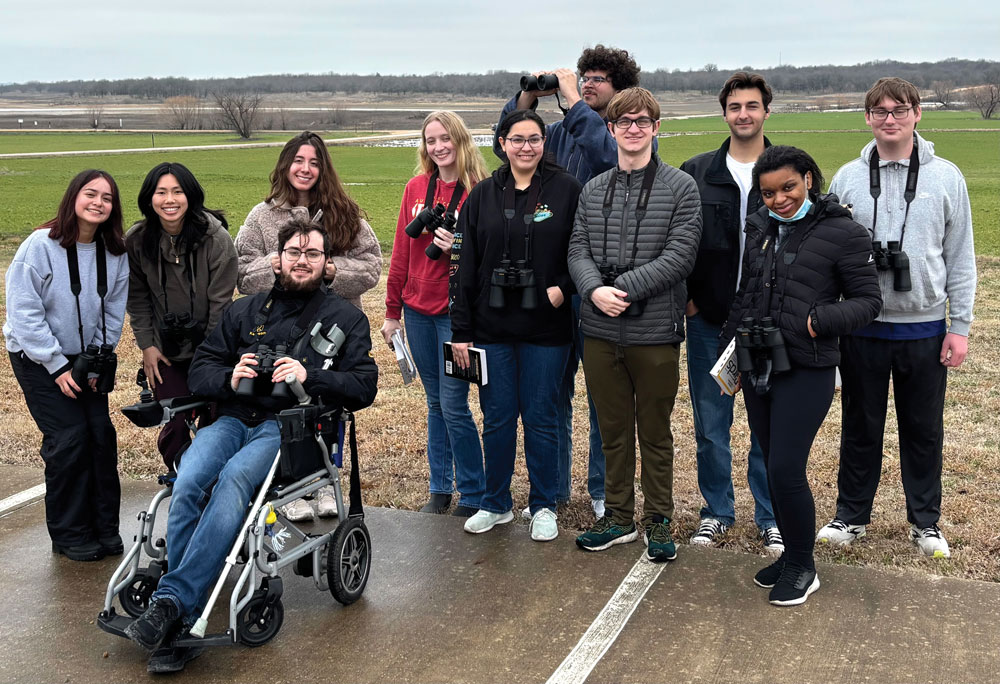
Many of Stidham’s classes venture to locations across Grayson County, including Sneed Prairie, Hagerman National Wildlife Refuge, and the Denison Dam Spillway. His goal is to immerse students in the practice of field biology. “When I take them out, I have several outcomes in mind,” Stidham said. “One is them gaining experience as field scientists, being able to use binoculars, identify species, and learn other practical skills biologists utilize.” Field work brings biology to life. “Reading text and looking at data can give students outlines,” he added, “but much of biology is outside. Biology becomes less abstract and more of a reality for them.”
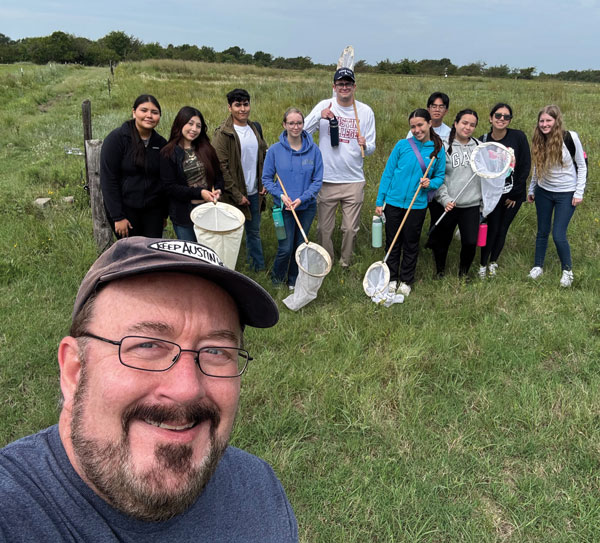
Students gain experience in field biology at Sneed Prairie with Dr. Stidham (above) and at Hagerman Wildlife Refuge (right).
Courtesy Photos
Field work brings biology to life for students at area sites in Grayson County such as Sneed Prairie, Hagerman National Wildlife Refuge, and the Denison Dam Spillway.
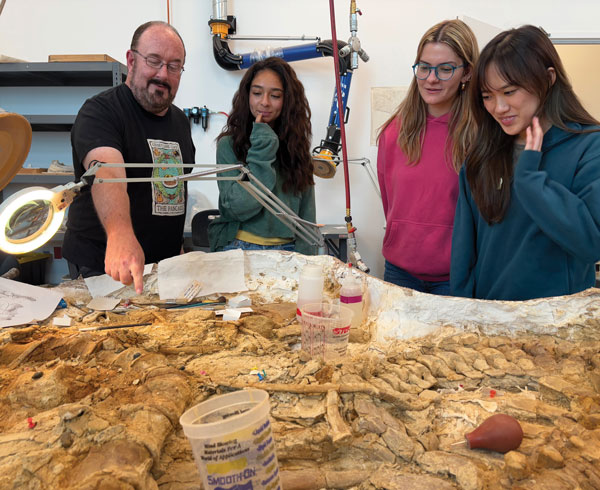
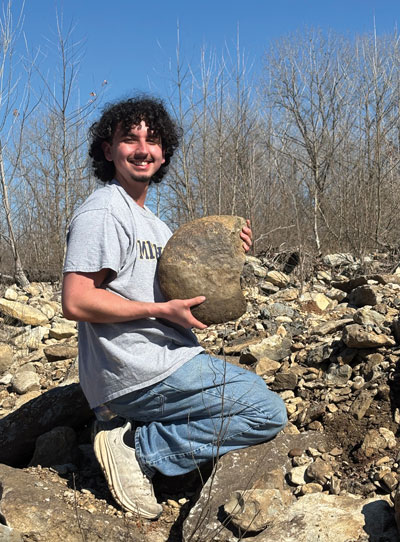
Stidham and students examine fossils at the Perot Museum of Nature and Science in Dallas (above). A student proudly shows an ammonite found near the Denison Dam (right).
Courtesy Photos
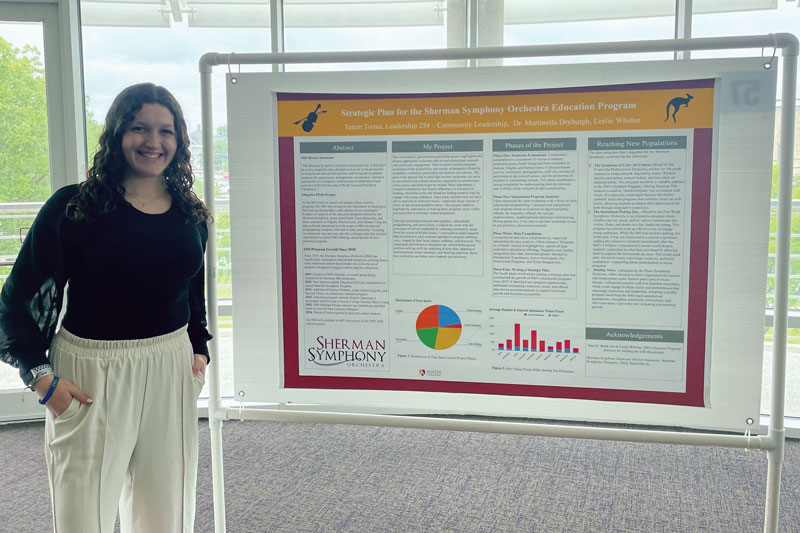
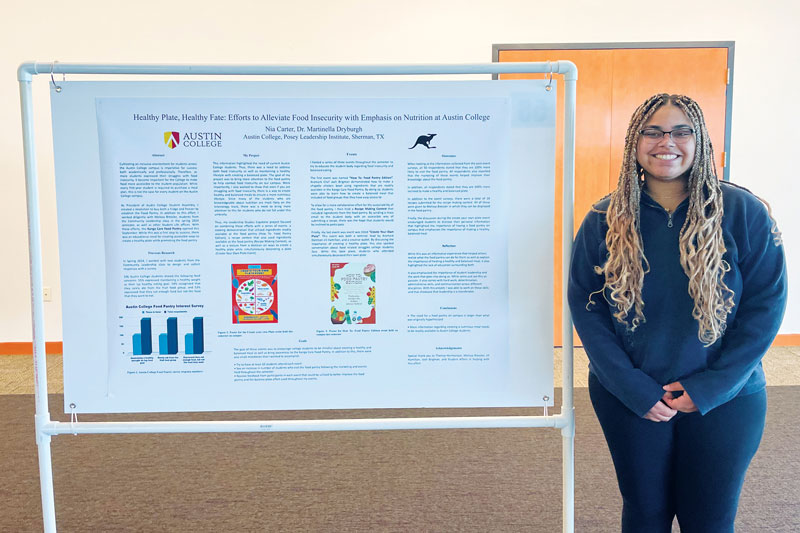
Students address real-world needs of a local organization in the Community Leadership course taught by Associate Professor of Business Administration Dr. Martinella Dryburgh. Tatum Torres ’25 is pictured above with her presentation offering a strategic plan for the Sherman Symphony Orchestra education program. Nia Carter ’25 is shown with her presentation highlighting efforts to alleviate food insecurity with emphasis on nutrition at Austin College.
Back on campus and throughout the Texoma community, Associate Professor of Business Administration Dr. Martinella Dryburgh is helping students connect coursework with realworld
needs through service-learning in her Community Leadership course. At the start of each semester, students choose from local organizations (scouted by Dryburgh), selecting the group that best fits their interests and strengths. “This model helps students connect classroom learning with meaningful, real-world impact,” said Dryburgh. Her students have contributed to organizations such as the Texoma Community Foundation, the Sherman Symphony Orchestra, the Sherman Boys and Girls Club, and regional aging and juvenile services programs.
The results are transformative. One standout effort involved Tristan Dick ’23, who helped Texoma Council of Governments’ Aging Services plan an Elder Justice conference, teaching community members how to protect seniors from scams and exploitation. “These projects strengthen communication, critical thinking, relationship-building, and problem-solving skills,” said Dryburgh, “while also helping students see how they can create positive change.”
These are just a few of the applied learning projects that take students from the classroom into many immersive settings, but the same philosophy drives them all: learning becomes most powerful when students can immediately connect it to real experiences outside the classroom. It is this shared commitment to hands-on inquiry that not only enriches every classroom, but also prepares students to navigate an ever-changing world with confidence, curiosity, and purpose.